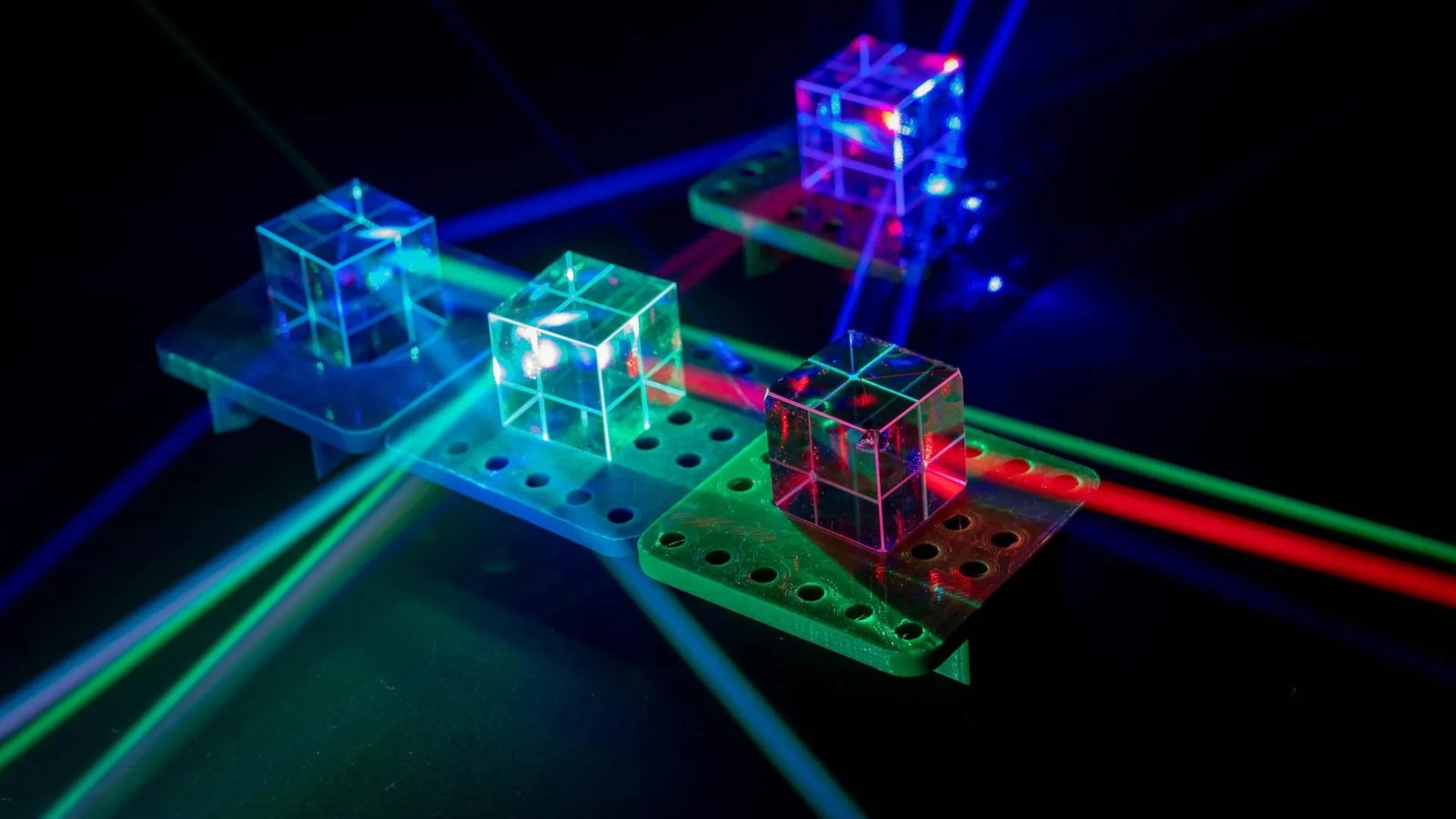
Scintillation materials are the unsung heroes of modern radiation detection. These specialized compounds possess the unique ability to luminesce—emitting faint flashes of light—when struck by high-energy radiation such as X-rays or gamma rays. This conversion mechanism is fundamental to numerous fields, from life-saving medical imaging to critical security systems .

Understanding the Scintillation Mechanism
When radiation deposits energy into a scintillator, it excites electrons within the crystal lattice. As these electrons return to their ground state, they release energy in the form of photons, typically in the visible or UV spectrum. A photodetector, such as a photomultiplier tube (PMT) or a silicon photomultiplier (SiPM), then detects these light flashes and converts them into electrical signals that can be processed into an image or data.
Key Crystal Properties to Consider
Not all scintillators are created equal. The choice of a high-resolution scintillator depends on several critical crystal properties:
Light Yield: The number of photons produced per unit of deposited energy. Higher light yield generally leads to better energy resolution.
Decay Time: How quickly the light flash fades. For fast timing applications like PET, a short decay time is crucial.
Stopping Power: The material’s density and atomic number (Z) determine how effectively it absorbs radiation.
Applications Shaping Our World
The unique LYSO crystal properties, including high density and fast decay time, make it the material of choice for PET CT imaging (Positron Emission Tomography). Meanwhile, BGO crystal application is common in security for air cargo and baggage X-ray scanning due to its high stopping power and cost-effectiveness for large volumes. As the need for more precise and efficient radiation detection grows, the development of novel scintillation materials remains a vibrant field of research.